You finished your physical therapy sessions. Your therapist said you were "discharged." But when you tried to get back to running, golfing, or playing with your kids, something still felt off. The pain might be gone, but you don't feel like yourself yet.
If this sounds familiar, you're not alone. Many active adults find themselves stuck in this frustrating gap between "pain-free" and "fully functional." Empower U PT & Performance helps active adults and athletes bridge this gap through performance-focused rehabilitation that goes beyond basic pain relief.
This guide explains why traditional approaches often fall short for active people, what performance-focused rehabilitation looks like, and how you can finally get back to the activities you love with confidence.
Key Takeaways: Why You Still Feel Limited After Physical Therapy
- Being discharged as "pain-free" does not mean your body is ready for sport-level demands or high-intensity activities.
- Most rehabilitation programs focus on basic daily function rather than the strength, power, and mobility needed for sports.
- Performance physical therapy uses objective benchmarks and sport-specific progressions to close the gap between discharge and full return.
- Empower U PT & Performance offers 1-on-1 sessions with Doctors of Physical Therapy focused on measurable return-to-sport criteria.
- Return-to-sport testing should include strength measurements, movement quality assessments, and sport-specific drills before clearance.
What Does "Discharged" Really Mean in Physical Therapy?
When your physical therapist discharges you, it typically means you've achieved the goals set at the beginning of your care. For most rehabilitation programs, these goals center on pain reduction, basic mobility, and the ability to perform daily activities.
The problem? These goals rarely align with what active adults actually need. Walking up stairs without pain is very different from running a 5K or swinging a golf club at full speed.
According to research from rehabilitation experts, surgical clearance and therapy discharge are designed around Activities of Daily Living. These tasks require roughly 30 percent of your maximum physical capacity. Returning to sports requires bursts at 80 to 85 percent intensity with unpredictable loading patterns.
The Gap Between Daily Function and Sport Function
Think about what your body needs to do during your favorite activity. A golfer needs rotational power through the hips and thoracic spine, core stability during the swing, and the ability to repeat that movement 80+ times per round.
A runner needs single-leg strength and stability, shock absorption through the lower extremities, and cardiovascular endurance to maintain form over miles. These demands far exceed what basic rehabilitation addresses.
Why Active Adults Plateau After Physical Therapy
Several factors contribute to the plateau many active adults experience after completing their rehabilitation programs. Understanding these helps you identify what's missing in your recovery.
Treatment Stops at Pain Relief
The first and most common reason for stalled progress is that treatment ends when pain ends. Pain is an important indicator, but the absence of pain doesn't mean your tissues have fully healed or that you've restored the strength and capacity you need.
Your body may have compensated around the injury. These compensation patterns can persist long after the original problem resolves. Without addressing them, you carry movement inefficiencies that increase your risk of re-injury or new problems.
Generic Exercise Programs Don't Match Your Sport
Many rehabilitation protocols use standardized exercise progressions. You might do the same hip strengthening exercises as someone half your age with completely different activity goals.
Cookie-cutter programs don't account for the specific demands of your sport or activity. A golfer needs different movement patterns than a tennis player. A weekend warrior training for a half marathon has different needs than someone who wants to return to CrossFit.
Limited One-on-One Time With Your Therapist
In many clinical settings, patient volume takes priority. You might spend 15 minutes with your therapist and the rest of your session with an aide or on machines. This limits your ability to get personalized feedback on your movement quality.
High-quality rehabilitation requires hands-on assessment and correction. Your therapist needs to watch you move, identify compensations, and adjust your program accordingly. This takes time that many clinics simply don't allocate.
No Objective Benchmarks for Return to Activity
How do you know when you're actually ready to return to your sport? Many people rely on how they feel, or they simply wait a certain number of weeks or months. Neither approach tells you whether your body can handle the demands you're about to place on it.
Without objective testing, you're essentially guessing. And guessing leads to either returning too soon and risking re-injury, or waiting too long and losing confidence in your body's capabilities.
What Is Performance Physical Therapy for Active Adults?
Performance physical therapy bridges the gap between basic rehabilitation and full return to sport. It's designed specifically for people who want more than pain relief—they want to get back to doing what they love at the level they expect.
This approach combines traditional physical therapy techniques with sports performance training principles. The focus shifts from "can you do daily activities?" to "can you perform your sport safely and effectively?"
The Core Principles of Performance Rehabilitation
Performance-focused rehabilitation starts with understanding your specific goals. What activity do you want to return to? What does success look like for you? Your therapist builds your entire program around these answers.
Treatment addresses not just the injury site but the entire kinetic chain. For example, knee pain in runners often relates to hip weakness or ankle mobility restrictions. Addressing only the knee misses the root cause.
Progressions follow a logical sequence from basic movement to sport-specific drills. You gradually increase load, speed, and complexity until you can perform the demands of your activity without compensation or pain.
How Performance Rehab Differs From Standard Care
The table below highlights key differences between standard rehabilitation and performance-focused approaches:
| Standard Rehabilitation | Performance Rehabilitation |
|---|---|
| Goals: Pain relief, basic mobility | Goals: Full return to sport at previous level |
| Discharge: When pain resolves | Discharge: When objective criteria are met |
| Exercises: Generic protocols | Exercises: Sport-specific progressions |
| Testing: Subjective ("How do you feel?") | Testing: Objective benchmarks (strength ratios, hop tests) |
| Timeline: Calendar-based | Timeline: Criteria-based |
Objective Benchmarks for Return to Sport Rehabilitation
One of the most important differences in performance-focused care is the use of objective measurements. Instead of asking "does this hurt?" your therapist tests whether your body can actually do what you're asking it to do.
Strength Testing and Limb Symmetry
Strength testing compares your injured side to your non-injured side. Most return-to-sport protocols require at least 90% symmetry before clearance. Some research suggests even higher thresholds reduce re-injury risk.
For lower extremity injuries, quadriceps and hamstring strength are critical. Your therapist may use dynamometers or other testing equipment to get precise measurements. These numbers guide your progression and tell you exactly where you stand.
A common benchmark cited in the sports medicine literature is achieving at least 3.0 Nm/kg of knee-extension torque relative to body weight. This absolute threshold matters more than symmetry alone for protecting your joints during high-speed movements.
Functional Movement Tests
Beyond isolated strength, you need to demonstrate that you can use that strength in functional patterns. Hop tests are commonly used for lower extremity injuries. These include single-leg hops for distance, triple hops, and crossover hops.
Each test measures a different quality: power, endurance, stability, and coordination. Achieving 90% or greater limb symmetry on these tests indicates your injured leg can produce and absorb force similarly to your healthy leg.
Sport-Specific Movement Quality
The final piece involves sport-specific drills that replicate the demands you'll face in your activity. For a golfer, this might include rotational power tests and simulated swing assessments. For a runner, it could involve gait analysis and running mechanics evaluation.
Your movement quality matters as much as your strength. Compensation patterns that look fine during walking may become obvious during higher-speed activities. Catching and correcting these before you return to sport prevents new injuries.
How Empower U PT & Performance Approaches Return to Sport
At Empower U PT & Performance, every session is 100% one-on-one with your Doctor of Physical Therapy. This means you get individualized attention throughout your entire appointment, not just a brief check-in before working with an aide.
The focus extends beyond pain relief to address the root causes of your symptoms and build the capacity you need for your specific activities. Treatment combines hands-on manual therapy with progressive strengthening and sport-specific training.
The Three-Step Process: Feel Better, Move Better, Score Better
Empower U structures rehabilitation around a clear progression. First, you address the acute symptoms and reduce pain through established physical therapy techniques. This creates a foundation for the work ahead.
Second, you identify and correct the underlying causes of your problem. This might involve addressing mobility restrictions, strength deficits, or movement pattern issues that contributed to your injury in the first place.
Third, you build the performance capacity needed to return to your activities. For golfers, this means adding yards to your drive and years to your playing career. For runners and other athletes, it means returning to your sport with confidence and reduced re-injury risk.
Sport-Specific Programming for Golfers and Athletes
Empower U offers specialized programs including Golf Physical Therapy with Titleist Performance Institute (TPI) certification. This golf-specific assessment examines 16 movement screens that relate directly to your swing mechanics.
For athletes in other sports, the Complete Athlete Development Program addresses mobility, strength, power, and speed through 60-minute one-on-one sessions. Each session includes dynamic warm-up, sport-specific speed and agility work, strength and power training, anaerobic conditioning, and cool-down.
Step-by-Step Guide to Progressing Beyond Pain Relief
If you've plateaued after your initial rehabilitation, here's a framework for progressing to full return to sport. This applies whether you're working with a performance-focused therapist or advocating for yourself in another setting.
Step 1: Establish Your Baseline
Before progressing, you need to know where you currently stand. This means testing your strength, mobility, and movement quality objectively. Work with your therapist to establish baseline measurements that you can track over time.
Write down your current abilities. How far can you walk or run without symptoms? How much weight can you lift? What movements cause discomfort? This data guides your progression and helps you celebrate improvements along the way.
Step 2: Build a Foundation of Strength
Strength forms the foundation for all higher-level activities. You cannot generate power without first having adequate strength. Focus on the muscle groups most important for your activity.
For most active adults, this includes hip strength (glutes, hip flexors), core stability (deep abdominals, back extensors), and single-leg strength and balance. Progress gradually, increasing load as your body adapts.
Step 3: Add Power and Speed
Once you have adequate strength, begin adding explosive movements. Power is the ability to generate force quickly, which is essential for nearly every sport. Start with low-intensity plyometrics and gradually increase the challenge.
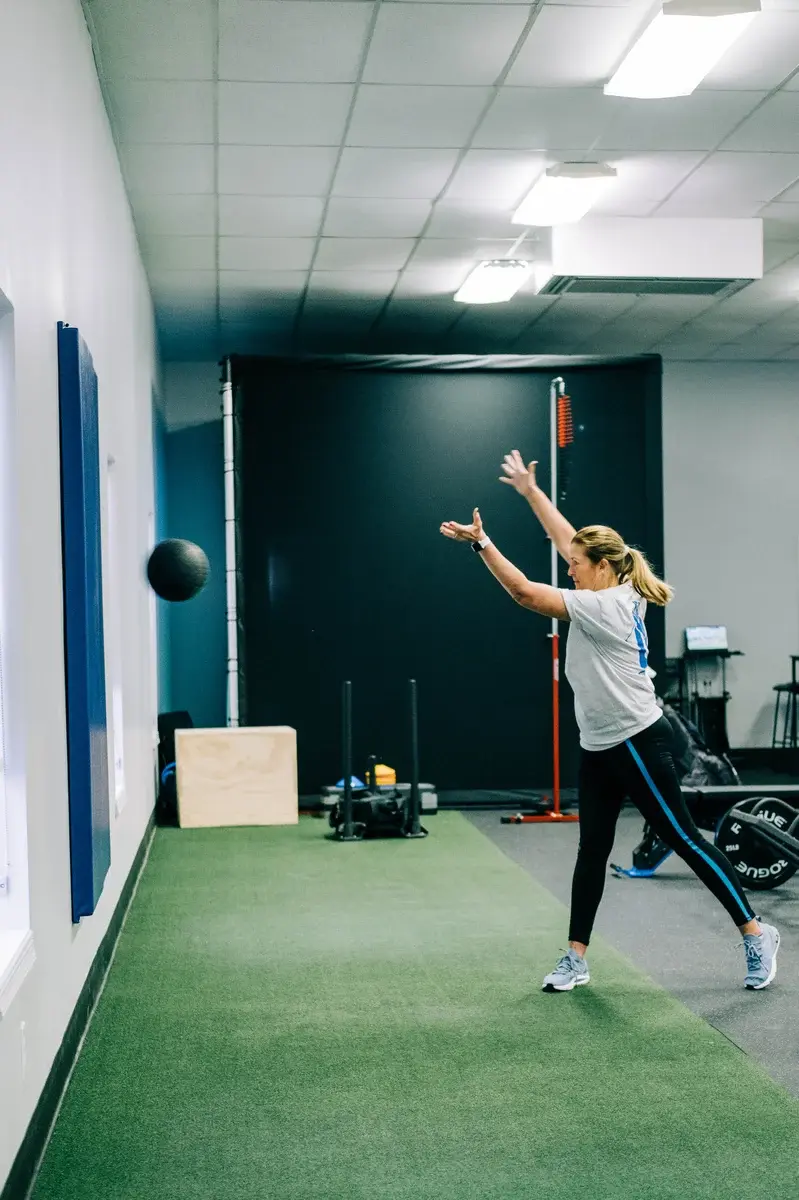
For lower body, this might progress from bodyweight squats to jump squats to single-leg hops. For upper body and rotational sports, medicine ball throws and rotational exercises build the power you need.
Step 4: Practice Sport-Specific Drills
With strength and power established, you can begin reintroducing the specific movements of your sport. Start at reduced intensity and gradually work up to full-speed practice.
Pay attention to how your body responds. Some discomfort with new activities is normal, but sharp pain or swelling signals you've progressed too quickly. Back off and build more foundation before trying again.
Step 5: Test Your Readiness
Before returning to full competition or activity, confirm your readiness with objective testing. This might include strength tests, functional movement screens, and sport-specific assessments.
Compare your results to established benchmarks and to your pre-injury levels if available. If you meet the criteria, you can return with confidence. If not, you know exactly what to work on next.
Common Signs You Need Performance-Focused Rehabilitation
How do you know if you're a candidate for performance-focused care rather than standard rehabilitation? Look for these indicators that suggest you need more than basic treatment.
You Were Discharged But Don't Feel Ready
If your therapist said you were done but you still feel hesitant to return to your activity, trust that instinct. Your body often knows things before your conscious mind catches up. Pain-free doesn't automatically mean ready.
You Keep Re-Injuring the Same Area
Recurring injuries suggest that the underlying cause was never fully addressed. Each time you return to activity, the same weak link breaks down again. Performance-focused care digs deeper to find and fix these root causes.
Your Performance Has Declined Since Your Injury
Maybe you can do your activity, but not at your previous level. Your golf handicap has increased. Your running pace has slowed. Your lifts in the gym have decreased. These performance declines indicate incomplete rehabilitation.
You've Lost Confidence in Your Body
Fear of re-injury can be as limiting as the injury itself. If you find yourself holding back, protecting the injured area, or avoiding certain movements, you haven't fully recovered. Rebuilding confidence requires proving to yourself that your body can handle the demands.
Questions to Ask Your Physical Therapist About Return to Sport
Whether you're starting a new course of care or evaluating your current treatment, these questions help ensure you're getting the performance-focused approach you need.
What Specific Criteria Will Determine When I'm Ready to Return?
A good answer includes objective benchmarks: strength ratios, functional test scores, and sport-specific milestones. A concerning answer relies entirely on time ("after six weeks") or subjective measures ("when you feel ready").
How Will My Treatment Address the Specific Demands of My Sport?
Your therapist should ask detailed questions about your activity and incorporate sport-specific exercises into your program. If your treatment looks identical to every other patient's, you're likely receiving generic care.
How Much One-on-One Time Will I Have With You Each Session?
Quality care requires individualized attention. Know exactly how much time you'll spend with your therapist versus aides or equipment. More hands-on time generally means better outcomes.
What Happens If I'm Not Progressing as Expected?
Good therapists have contingency plans. They know when to adjust the approach, when to refer to other specialists, and how to troubleshoot plateaus. If the answer is simply "we'll keep doing what we're doing," look for alternatives.
Fear of Re-Injury and Its Effects
Fear of re-injury is common and normal. However, when fear causes you to move differently, it can actually increase your injury risk. Guarded movements and hesitation change your mechanics in ways that stress your body unevenly.
Research shows that athletes who return to sport with high fear of re-injury are more likely to get hurt again. Addressing this fear through graduated exposure and confidence-building is part of comprehensive rehabilitation.
Building Confidence Through Progressive Challenges
Confidence comes from evidence. Every time you successfully complete a challenging task without injury, you build trust in your body. This is why progressive loading and sport-specific drills matter so much.
Start with tasks you know you can do, then gradually increase the challenge. Each success builds on the last, creating a foundation of positive experiences that replaces the memory of your injury.
How Long Does Performance-Focused Rehabilitation Take?
One of the most common questions is about timeline. The honest answer is that it depends on many factors, including your injury type, your goals, and how your body responds to treatment.
Why Criteria-Based Timelines Work Better Than Calendar-Based
Instead of asking "how many weeks until I'm better?" focus on the criteria you need to meet. This approach ensures you don't return too soon (risking re-injury) or wait too long (losing conditioning and confidence).
Your therapist should give you clear milestones to work toward. When you achieve them, you progress. When you don't, you know what to focus on. This removes the guesswork and frustration of arbitrary timelines.
Factors That Influence Recovery Speed
Several factors affect how quickly you progress. Your injury severity and type matter, as do your pre-injury fitness level and your age. Your commitment to your home exercise program significantly impacts outcomes.
Nutrition, sleep, and stress levels also play roles. Your body heals during rest, so adequate recovery time between sessions matters. Work with your therapist to optimize all these factors for the fastest safe progression.
In Conclusion: Getting Back to What You Love Requires More Than Pain Relief
If you've completed physical therapy but still don't feel like yourself, you're not imagining things. The gap between "discharged" and "ready" is real, and closing it requires a different approach than standard care.
Performance physical therapy gives active adults and athletes what they actually need: objective benchmarks, sport-specific progressions, and the one-on-one attention required to address their unique demands. This approach doesn't just get you pain-free—it gets you back to performing at the level you expect.
Don't settle for "good enough." Your body is capable of more than basic daily activities. With the right guidance and progressive challenge, you can return to your sport stronger and more resilient than before your injury.
FAQs About Why You Still Feel Limited After Physical Therapy
Why do I still have pain after physical therapy ended?
Residual discomfort after discharge often indicates incomplete healing or persistent compensation patterns. Your body may have adapted around the injury rather than fully resolving it.
Empower U PT & Performance addresses these underlying issues through one-on-one sessions that dig deeper than basic pain relief.
What is the difference between physical therapy and performance rehab?
Standard physical therapy focuses on reducing pain and restoring basic daily function. Performance rehabilitation goes further, building the strength, power, and movement quality needed for sport-level demands.
Empower U PT & Performance specializes in this performance-focused approach for active adults and athletes who want more than pain relief.
How do I know when I'm ready to return to my sport after injury?
Readiness should be determined by objective criteria including strength testing, functional movement assessments, and sport-specific drills. Feeling "ready" or waiting a certain number of weeks is not sufficient.
Your therapist should test specific benchmarks before clearing you to return.
Can I do performance physical therapy without a recent injury?
Yes. Many active adults use performance-focused care to address chronic limitations, improve their movement quality, or enhance their athletic performance even without a specific injury.
Empower U PT & Performance works with athletes on prevention and performance optimization, not just injury recovery.
What sports benefit most from performance physical therapy?
Any sport with physical demands beyond walking benefits from this approach. Golf, running, tennis, CrossFit, and recreational athletics all require sport-specific preparation.
Empower U PT & Performance offers specialized programs for golfers through TPI-certified training and general sports performance for all active adults.
How long does return-to-sport rehabilitation typically take?
Timeline varies based on your injury, goals, and response to treatment. A criteria-based approach focuses on meeting specific benchmarks rather than waiting a set number of weeks.
This ensures you return when you're actually ready, not according to an arbitrary calendar.