That nagging lower back pain after a round of golf doesn't have to be your new normal. If you've been sidelining yourself or cutting rounds short because of discomfort, you're not alone. The good news? Empower U PT & Performance helps golfers identify the root causes of their pain and fix them through targeted swing mechanics and core stability work.
This guide walks you through seven actionable steps to reduce back pain and get back to playing the golf you love. You'll learn how your body mechanics contribute to pain, plus practical exercises you can start today.
Quick Guide: How to Reduce Golf Back Pain in 7 Easy Steps
- Assess Your Current Swing Mechanics – Record your swing and look for reverse spine angle or early extension patterns.
- Improve Hip Mobility – Use targeted hip stretches to free up rotation and reduce lumbar spine stress.
- Strengthen Your Core for Stability – Empower U PT & Performance recommends anti-rotation exercises to protect your spine during the swing.
- Increase Thoracic Spine Rotation – Open up your mid-back to take rotational load off your lower back.
- Practice Proper Setup Posture – Establish a neutral spine position before you even take the club back.
- Warm Up With Dynamic Movements – Prepare your muscles with golf-specific movements before each round.
- Schedule a TPI Assessment – Get a professional evaluation to identify your unique physical limitations.
How to Reduce Golf Back Pain Through Mechanics and Strength
1. Assess Your Current Swing Mechanics
Before you can fix a problem, you need to understand what's causing it. The most common swing faults linked to lower back pain are reverse spine angle and early extension. Reverse spine angle happens when your torso bends toward the target at the top of your backswing, forcing your spine to rapidly extend and side-bend during the downswing.
Early extension occurs when you thrust your hips toward the ball instead of rotating them. Both patterns place massive compressive loads on your lumbar spine. Record your swing from a down-the-line view and compare it to what a neutral spine position looks like. You're looking for excessive arching, side-bending, or your hips moving toward the ball at impact.
2. Improve Hip Mobility
Your hips are designed to rotate—your lower back is not. When hip mobility is limited, your lumbar spine compensates by taking on rotational forces it wasn't built to handle. According to research published in Sports Health, this compensation pattern is one of the primary drivers of golf-related back pain.
Start with 90/90 hip stretches and hip flexor stretches, holding each position for 30 seconds. Add hip circles and internal rotation exercises to your daily routine. The goal is to unlock enough hip rotation so your lumbar spine can stay stable while your hips do the work.
3. Strengthen Your Core for Stability
Here's what many golfers get wrong: they train their core to move when they should be training it to resist movement. Your core's job during a golf swing is to transfer energy from your lower body to your upper body while keeping your spine protected. That means stability, not crunches.
Focus on anti-extension exercises like dead bugs and planks. Add anti-rotation work with Pallof presses and half-kneeling chops. Studies in the International Journal of Sports Physical Therapy confirm that these exercises specifically target the stability patterns golfers need most.
4. Increase Thoracic Spine Rotation
Your thoracic spine—the middle section of your back—is built for rotation. When this area gets stiff from sitting at a desk or general lack of movement, your body has to find rotation somewhere else. That "somewhere else" is usually your lower back, and that's where problems start.
Try side-lying thoracic rotations (sometimes called "book openers") to open up this area. Start on your side with your knees bent, then rotate your top arm and upper back while keeping your hips stacked. Hold the stretch for a breath, then return. Aim for 10 repetitions on each side before your round.
5. Practice Proper Setup Posture
Your spine position at address sets the tone for your entire swing. A setup with excessive lumbar extension (swayback) or flexion puts you at a mechanical disadvantage before you even move the club. You want a neutral spine with a slight hip hinge.
Think about keeping your back flat—not rounded, not arched—with your weight evenly distributed between your feet. Your shoulders should be back and relaxed. This position allows your spine to rotate efficiently without compensating through excessive side-bending or extension.
6. Warm Up With Dynamic Movements
Heading straight to the first tee without warming up is one of the fastest ways to aggravate your back. Cold muscles and stiff joints aren't ready for the explosive, rotational demands of a golf swing. A proper warm-up increases blood flow, improves range of motion, and primes your nervous system for performance.
Spend 10 minutes on dynamic movements before you play. Include torso twists, hip circles, arm circles, and bodyweight squats. Add a few slow practice swings starting at 50% speed and gradually building up. The Hospital for Special Surgery recommends this approach to reduce compressive forces on the spine.
Check out our dynamic warm up video with Dr. Evan 👉 HERE
7. Schedule a TPI Assessment
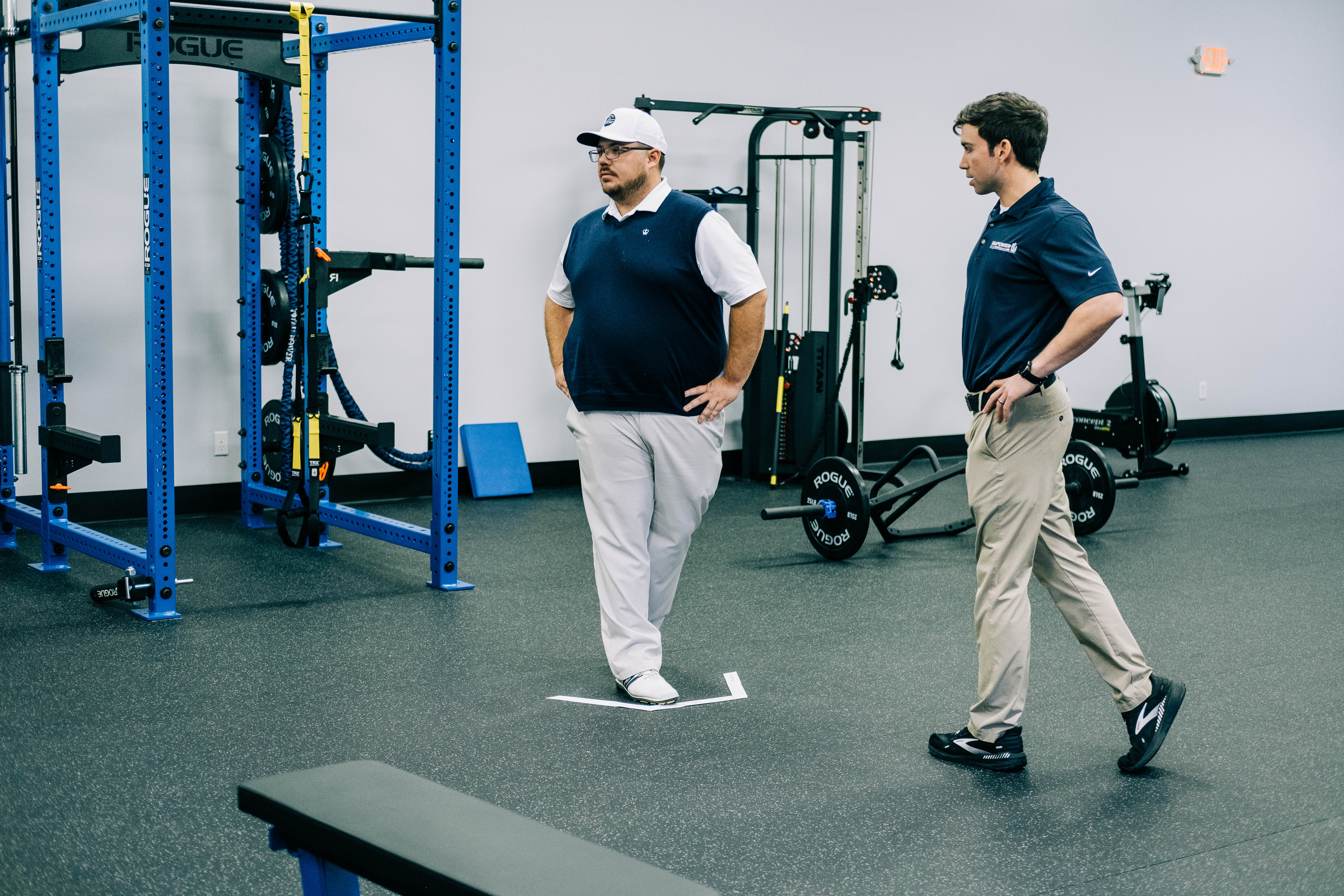
A Titleist Performance Institute (TPI) assessment gives you a complete picture of how your body's physical limitations affect your swing. TPI-certified professionals evaluate 16 specific movement patterns that relate to common swing faults. They identify exactly where your restrictions are—whether it's hip internal rotation, thoracic mobility, or core stability—and create a targeted plan to address them.
This isn't about changing your swing; it's about giving your body the physical tools to execute your swing efficiently. According to case studies in the American Journal of Case Reports, golfers who complete TPI-based programs see measurable improvements in both pain levels and performance metrics like driving distance.
CLICK HERE TO LEARN MORE ABOUT EMPOWER U TPI ASSESSMENT
What Causes Lower Back Pain in Golfers?
The golf swing generates approximately eight times your body weight in compressive force through your spine. That load, repeated hundreds of times per round (and thousands of times per season), can cause significant strain if your body isn't prepared for it.
The lumbar spine isn't designed to rotate—it's designed for stability. Your rotation should come from your hips and thoracic spine. When those areas are restricted by tightness or weakness, your lower back takes over and absorbs forces it wasn't built to handle.
Additionally, muscle imbalances play a major role. Weak glutes, tight hip flexors, and an underdeveloped core create a recipe for compensatory movement patterns that stress the lower back with every swing.
How Does Core Stability Protect Your Spine During the Swing?
Think of your core as the transmission system that transfers power from your legs to your arms. A strong, stable core doesn't just protect your spine—it actually helps you hit the ball farther by creating a more efficient energy transfer.
During the backswing, your core resists rotation to create separation between your upper and lower body. This "X-factor" creates stored energy. During the downswing, your core maintains stability while that energy releases through the kinetic chain to the club head.
When your core is weak or poorly trained, energy leaks out at the lumbar spine. You lose power, and your spine absorbs forces it shouldn't. Training your core to resist movement—not create it—is the key to both performance and injury prevention.
How Empower U PT & Performance Helps You Play Pain-Free Golf
Empower U PT & Performance specializes in golf-specific physical therapy and performance training for active adults who want to keep playing the game they love. Our TPI-certified Doctors of Physical Therapy evaluate your movement patterns, swing mechanics, and physical limitations in one-on-one sessions designed specifically for you.
We don't use a one-size-fits-all approach. Your treatment plan addresses your unique restrictions—whether that's hip mobility, thoracic rotation, core stability, or all three. Through manual therapy, targeted strengthening, and real-time swing analysis, Empower U PT & Performance helps you build a body that supports your golf swing instead of fighting against it.
Ready to play pain-free? Schedule your free discovery call to find out how our Golf Performance Program can help you get back on the course with confidence.
FAQs About How to Reduce Golf Back Pain
Why does my lower back hurt after playing golf?
Your lower back likely hurts because it's compensating for limited mobility in your hips or thoracic spine. When these areas can't rotate properly, your lumbar spine takes on rotational forces it wasn't designed to handle. Empower U PT & Performance identifies these restrictions and helps you fix them through targeted mobility and strengthening work.
Can I play golf with lower back pain?
It depends on the severity. Playing through pain often reinforces the faulty movement patterns causing the problem in the first place. If your pain is mild and doesn't worsen during or after play, you can likely continue with modifications. Empower U PT & Performance recommends a professional evaluation to understand what's driving your pain before deciding whether to play through it.
How long does it take to see improvement?
Most golfers notice improvements in pain levels within two to four weeks of consistent mobility and strengthening work. Performance improvements—like increased driving distance or more consistent ball striking—often take six to eight weeks. The key is consistency: doing the right exercises regularly produces better results than occasional intense sessions.
Are core exercises enough to fix golf back pain?
Core exercises are essential, but they're usually not enough on their own. Your back pain likely involves multiple factors including hip mobility, thoracic rotation, swing mechanics, and muscle imbalances. Empower U PT & Performance takes an approach that addresses all contributing factors rather than focusing on just one area.
What makes a TPI assessment different from a regular physical therapy evaluation?
A TPI assessment specifically evaluates the 16 movement patterns that relate to common golf swing faults. It connects your physical limitations directly to what's happening in your swing. This golf-specific approach means your treatment plan targets exactly what's affecting your game, rather than general fitness goals that may not translate to the course.